

Signs your child may need braces include crowded or crooked teeth, a bite that does not line up properly, difficulty chewing, or jaws that shift when biting down. Braces gently move teeth and help guide alignment to improve both function and appearance. The American Association of Orthodontists recommends a first orthodontic exam by age 7.
When a child needs braces, it usually means their teeth or jaws are not developing in ideal alignment. Some issues are easy to spot, like overlapping front teeth or a gap that will not close. Others are subtle and only show up during a professional evaluation.
As permanent teeth come in, alignment problems often become more obvious. That is why early exams matter. At Southern Smiles and McNutt Orthodontics, our smile team can spot small concerns before they grow into bigger ones, helping your child get the right care at the right age. Families across Cary, Clayton, and surrounding communities count on our orthodontic team to catch these developing issues early.
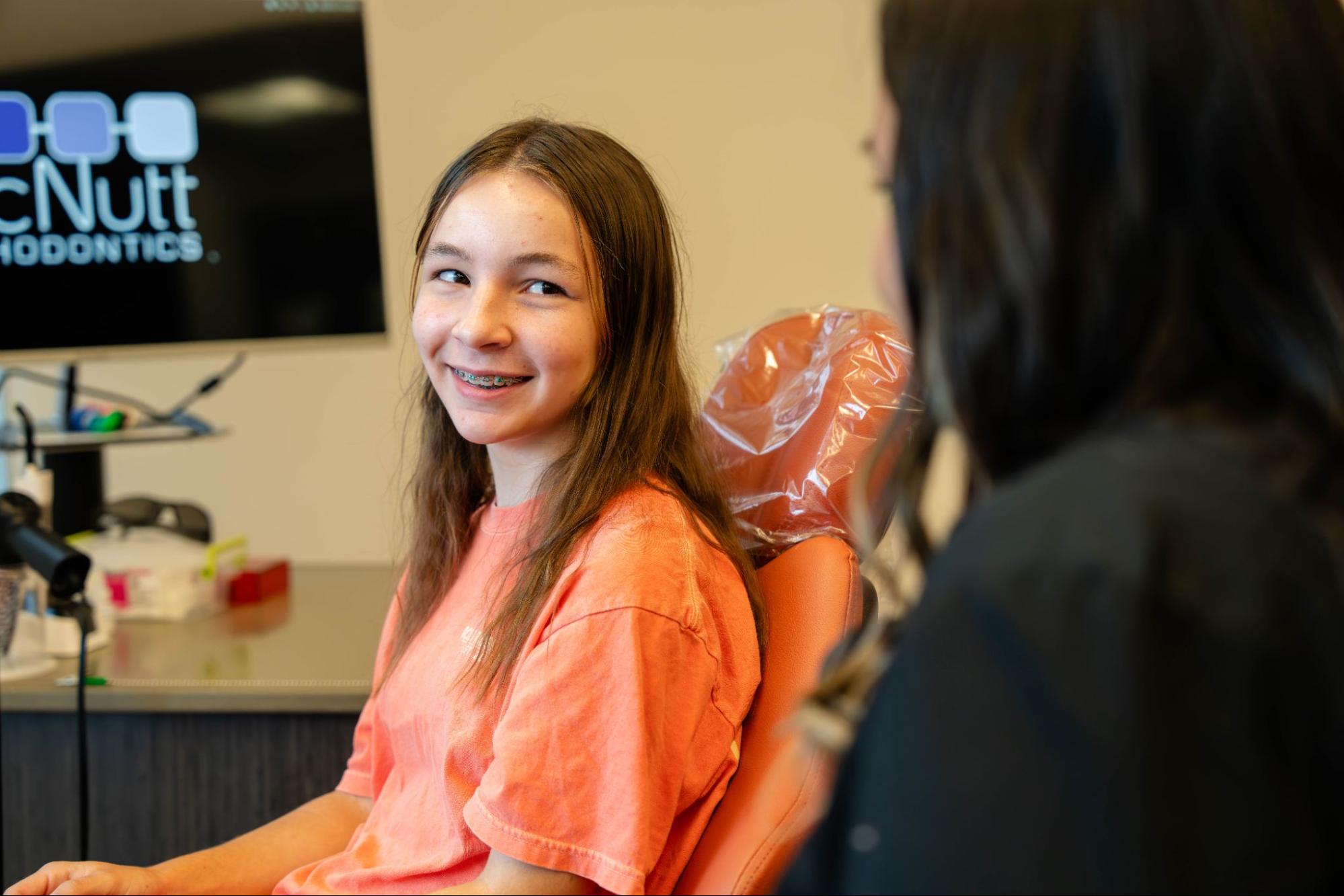
How to Tell If Your Child Needs Braces
Many parents wonder how to tell if their child should see our smile team. While only a professional exam can give you a clear answer, certain signs often point to alignment or bite issues that braces can correct. Look for these common signs your child may need braces:
- Crowded, crooked, or overlapping teeth. When teeth do not have enough room, they twist or shift, which makes brushing and flossing harder.
- Difficulty chewing, biting, or speaking clearly. If your child struggles to chew certain foods or has trouble with specific sounds, bite alignment could be part of the issue.
- Mouth breathing or persistent thumb-sucking past age 5. These habits can affect how the jaw and teeth develop over time.
- Early, late, or irregular loss of baby teeth. Baby teeth act as space holders. When they fall out too soon or stay too long, permanent teeth may erupt out of place.
- Teeth that do not meet properly or jaws that shift. If your child’s upper and lower teeth do not line up when biting, or the jaw moves to one side, that is worth a closer look.
- Noticeable gaps between teeth or protruding front teeth. Spacing issues and teeth that stick out can affect both appearance and oral function.
You might also notice your child biting their cheek often, complaining about jaw soreness, or feeling reluctant to smile in photos. None of these signs guarantee braces are needed, but together they are worth discussing with your child’s smile team. A trained eye can tell the difference between a habit that may resolve with monitoring and a pattern that calls for orthodontic attention.
Catching these clues early gives you more options. Some issues respond well to shorter treatment when handled young. Others can be monitored until the right time arrives, and our orthodontic team will let you know which path fits your child.
Benefits of Treating Orthodontic Issues Early
Treating bite and alignment problems early can give your child a stronger foundation for lifelong oral health. When teeth fit together properly, daily care becomes simpler, chewing and speech may improve, jaw stress can decrease, and confidence can grow. Early attention may also help guide jaw growth and reduce the chance of more involved care later.
Here is what your child can gain from early orthodontic care:
- Easier brushing and flossing. Straight teeth have fewer hidden spots where plaque can collect, lowering the risk of decay and gum disease.
- Improved chewing, speech, and bite function. A properly aligned bite can make eating more comfortable and may help with clear speech.
- Less stress on the jaw. When teeth meet evenly, your child may be less likely to experience jaw soreness or uneven tooth wear later in life.
- Stronger confidence. Kids who feel good about their smile may feel more comfortable in social settings, classroom presentations, and family photos.
- Better-guided jaw growth. Early intervention can help guide jaw development in a healthier direction when treatment is recommended.
How Does Early Treatment Support Daily Oral Care?
A well-aligned smile is simpler to keep clean. Brushing reaches every surface more easily, and floss slides between teeth without snagging on crowded spots. This steady, easier routine can mean fewer cavities and healthier gums over the years, which sets the stage for a smile your child can maintain into adulthood.
Why Does a Healthy Smile Matter Beyond the Teeth?
A child’s smile touches more than their mouth. Kids who feel good about how their teeth look often speak up more freely, laugh without hesitation, and carry themselves with greater ease around friends and family. When eating feels comfortable and the bite works the way it should, daily life simply runs more smoothly.

What Affects the Cost of Children’s Braces?
The cost of children’s braces depends on the type of braces chosen, the complexity of the bite issue, and how long treatment takes. Insurance coverage and available payment plans also influence the final out-of-pocket amount. Early evaluation can help families understand timing, treatment options, and what to expect financially before care begins.
Several factors play into pricing:
- Type of braces. Metal braces, clear braces, and clear aligners can each have different price points.
- Severity and complexity. A mild crowding issue is usually simpler to treat than a significant crossbite or jaw alignment concern.
- Length of treatment. Shorter treatment plans typically cost less than longer ones requiring more visits.
- Insurance and financing. Many families use orthodontic insurance benefits, and financing plans can spread payments over time.
- Timing of treatment. Catching problems earlier can sometimes make planning more straightforward.
At Southern Smiles and McNutt Orthodontics, we offer financing and insurance options to help make orthodontic care manageable for your family. Visit our Financing & Insurance page to learn more, or schedule a free ortho consult so our team can walk you through the numbers.
What Are the Different Types of Bite Problems?
Bite problems come in several forms, and each one calls for a slightly different approach. Understanding the basics helps you talk with your child’s smile team about the best fit.
Common bite and alignment issues include:
- Overbite: upper front teeth extend too far over the lower front teeth
- Underbite: lower teeth sit in front of upper teeth when biting
- Crossbite: some upper teeth bite inside the lower teeth instead of outside
- Open bite: upper and lower teeth do not touch when the mouth is closed
- Crowding: not enough room for teeth to sit in proper alignment
- Spacing: noticeable gaps between teeth
Once your child’s bite is evaluated, Dr. McNutt and our orthodontic team can recommend the right treatment option. You can also learn more on our Types of Orthodontic Bite Problems page.
| Option | Best For | Visibility | Typical Age Range |
|---|---|---|---|
| Metal Braces | Many bite problems, including more complex cases | Visible brackets and wires | Children and teens |
| Clear Braces | Similar cases to metal braces, with a more subtle look | Tooth-colored brackets | Older teens and adults |
| Clear Aligners | Mild to moderate alignment issues | Nearly invisible | Responsible teens and adults |
Every child’s bite is different, which is why a visit with our smile team is the best way to figure out what works for your child. Some kids do beautifully with traditional braces, while others may be candidates for clear aligners when they are older and ready for removable treatment.

At What Age Should Your Child See a Smile Team?
Your child should see a smile team for a first exam by age 7. By this age, enough permanent teeth have come in for our orthodontic team to spot developing issues like crowding, crossbites, or jaw growth concerns. An early visit does not always mean braces right away, but it does give your child’s smile team a baseline to monitor growth.
Most children will not need treatment immediately after that first exam. Instead, our team uses the visit to watch how teeth and jaws develop and recommend the right time to begin if treatment becomes needed.
Consider scheduling a visit sooner if you notice:
- Early or late loss of baby teeth
- Difficulty chewing or biting
- Mouth breathing or extended thumb-sucking
- Teeth that look crowded or stick out
- Jaws that shift or make sounds when moving
- Cheek biting or speech concerns
To make things easier for busy families, Southern Smiles and McNutt Orthodontics offer virtual ortho consults. You can get an initial review from the comfort of home before deciding on an in-person visit.
Orthodontic Care for Families in Cary and Clayton
Southern Smiles and McNutt Orthodontics provide orthodontic care for families in Cary, Clayton, and surrounding communities. If you are comparing local orthodontic options, visit our pages for Cary Orthodontics, Cary Orthodontic Office, Clayton Orthodontics, and Clayton Orthodontic Office.
For families who also need pediatric dental care, Southern Smiles offers child-focused dental support through pages like Pediatric Dentistry in Cary, Pediatric Dentist Cary NC, Pediatric Dentistry Services, and Pediatric Treatments.
You can also explore Orthodontic Treatment Options, Orthodontics for All Ages, and Your First Visit to learn more before scheduling.
Frequently Asked Questions About Children and Braces
How soon should my child get braces?
There is no single answer, since every child develops differently. The American Association of Orthodontists recommends a first orthodontic exam by age 7, which is when your child’s smile team can spot developing issues. Some kids may benefit from early treatment around ages 7 to 10, while others wait until most permanent teeth are in, often around ages 11 to 13.
What problems happen if a bad bite goes untreated?
Untreated bite issues can lead to uneven tooth wear, jaw soreness, difficulty chewing, and a higher risk of cavities or gum problems in crowded areas. Over time, some children may also feel less proud of their smile. Treating alignment issues at the right time can support healthier function and may help your child avoid more involved care later.
How long does braces treatment usually take?
Many children wear braces for about 12 to 24 months, though treatment length depends on the complexity of the case. Mild crowding may need less time, while bite corrections involving jaw alignment may take longer. Your child’s smile team will give you a clearer timeline after a full evaluation.
How do I care for my child’s braces?
Daily brushing after meals, careful flossing around brackets, and avoiding sticky or hard foods make a big difference. Regular check-ins with your smile team keep things on track. Our team will walk your child through care step by step and answer questions at every visit.
Can my child get clear aligners instead of metal braces?
Clear aligners can be a good choice for older kids and teens with mild to moderate alignment issues, as long as they are committed to wearing them as directed. For more complex bite corrections, traditional braces are often the better fit. During your visit, Dr. McNutt and our tooth mover team will recommend the option that suits your child best.
Ready to find out whether your child may need braces? Schedule a free ortho consult or start with a virtual ortho consult. Our team will review your child’s smile, answer your questions, and help you understand the best next step.