
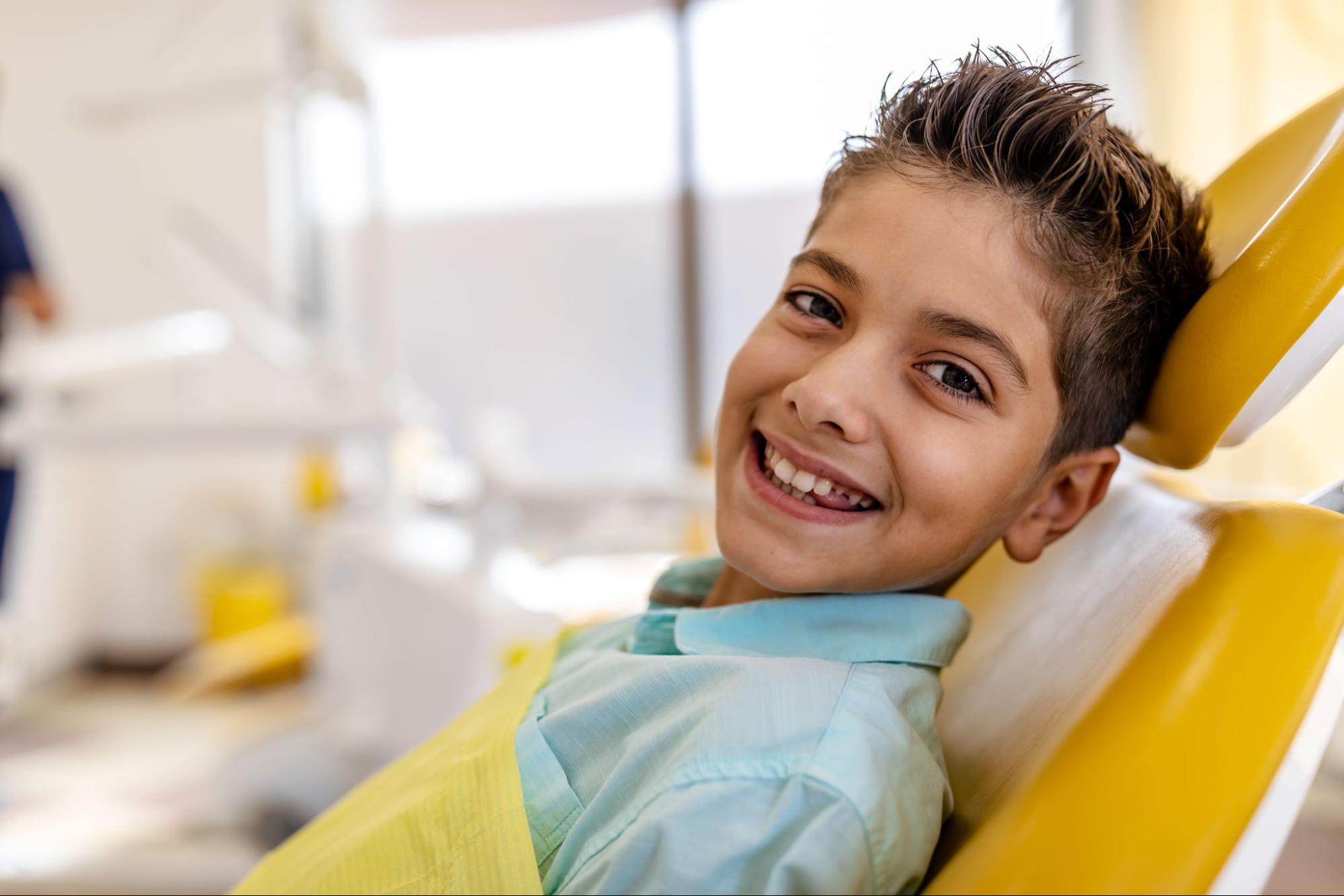
The best age to start orthodontic treatment follows one clear guideline: every child should have a first orthodontic evaluation by age 7. Active treatment most often begins between ages 9 and 14, once enough permanent teeth have arrived, though that range is general guidance rather than a hard rule. Growth stage, not a birthday, decides the ideal starting point for our Clayton families.
Age 7 matters for a practical reason. By then, the permanent front teeth and first molars have usually come in, which gives our smile team a real look at how the bite is developing. Crossbites, crowding, protruding front teeth, and jaw growth patterns all show up at this stage, long before they become harder to correct.
An early look does not mean early braces. For many kids, the answer after that first visit is simply “let’s watch and check back.” That’s a good answer. According to the American Association of Orthodontists, an orthodontic check-up no later than age 7 gives families the best chance to correct problems at the easiest possible moment.
Adults are welcome too. Once growth is complete, teeth can still be moved safely at 25, 45, or 70.
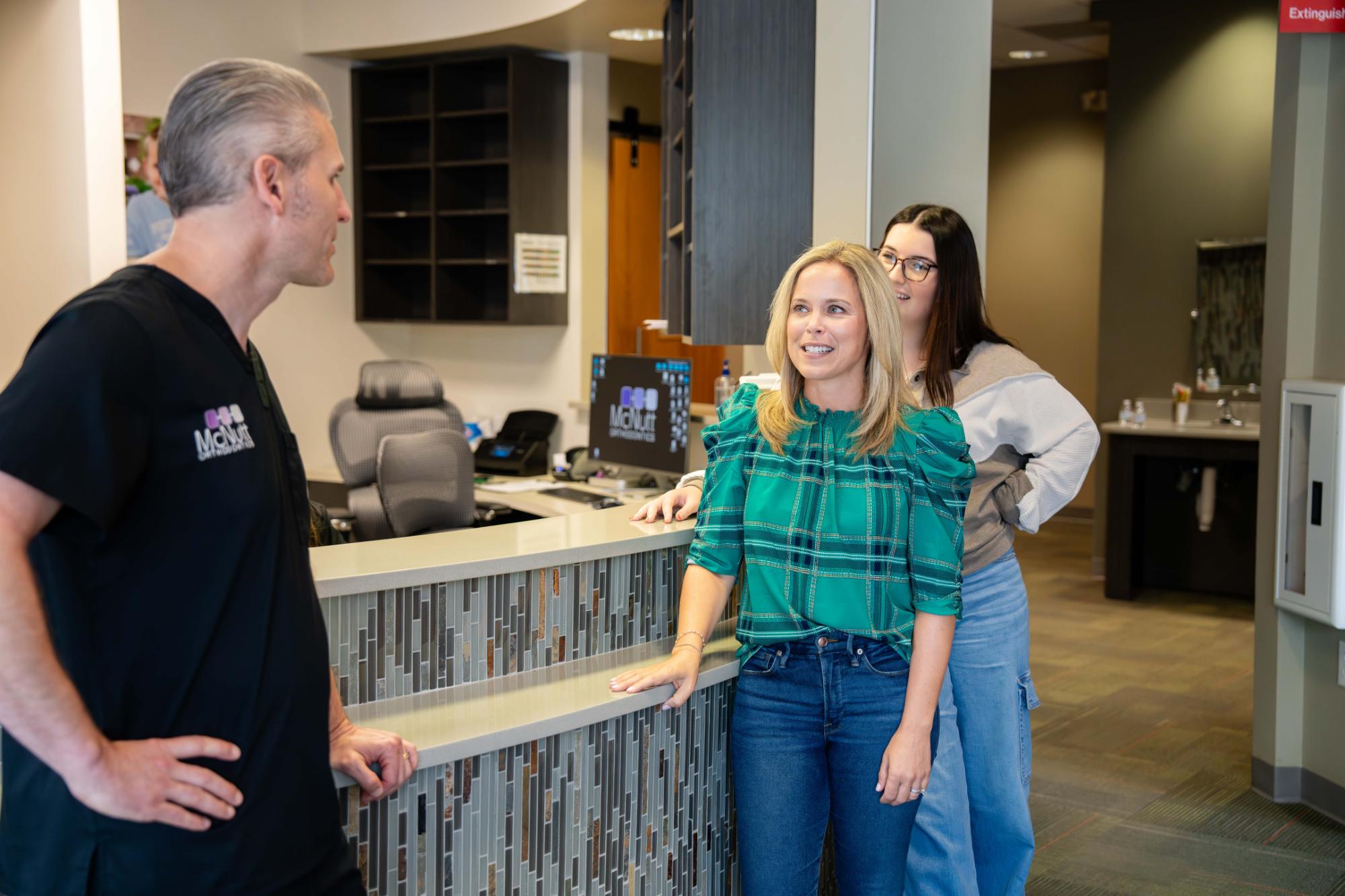
How Orthodontic Timing Works: Growth Stages and Treatment Windows
Orthodontic timing follows jaw growth, not the calendar. Baby teeth and eruption patterns show what’s coming next, and an active growth spurt lets our smile team guide the jaws while they’re still forming. Most families follow the same sequence: evaluation by age 7, growth monitoring, active treatment, then retention.
Here’s how each stage typically unfolds:
- Baby teeth set the stage. Tight spacing between primary teeth often predicts crowding later, while early or uneven tooth loss can shift the space permanent teeth need.
- Growth guidance visits. Many young guests come in once or twice a year for a quick progress check. We track eruption, jaw width, and bite changes, then start treatment when the timing is right.
- Active treatment. This is when braces, clear aligners, expanders, or other appliances do the real work of moving teeth and shaping the bite.
- Retention. Retainers hold the new smile in place while bone and gum tissue settle around the corrected positions.
Growing jaws respond to gentle, guided pressure in ways adult jaws simply can’t. An expander, for example, can widen a narrow upper jaw while the growth plate is still open, which may prevent a crossbite from locking in. That same correction in an adult often calls for different mechanics or a referral for surgical support.
Timing works both ways. Starting too early can mean years in appliances with little benefit, and waiting too long can turn a simple fix into a complex one. Our tooth mover team watches the development closely so treatment begins at the moment it will do the most good with the least time in braces.
Benefits of Starting Orthodontic Treatment at the Right Time
Well-timed care makes everything easier. When bone is still developing and teeth are still erupting, a little guidance now often prevents big corrections later.
Why Does Timing Matter While a Child Is Still Growing?
Growth is the one advantage that never comes back. While the jaws are still forming, steady and carefully directed force can change how the bite settles, which opens the door to corrections that become far more involved once development finishes. Those are the years when small adjustments carry the most weight.
- Easier corrections while bone is growing. Expanders, partial braces, and space maintainers work with your child’s natural development instead of against it.
- Lower chance of extractions or surgery later. Creating room early can preserve permanent teeth that might otherwise need to be removed to fix crowding.
- Better paths for erupting teeth. Guiding a stubborn canine or blocked-out tooth into position early keeps it from erupting into the wrong spot.
- Early habit correction. Thumb sucking, tongue thrusting, and mouth breathing all shape the jaws over time, and addressing them sooner protects the bite.
- Improved chewing, speech, and confidence. Kids notice their smiles during the school years, and a comfortable bite helps them eat, speak, and smile without second-guessing.
- Shorter time in braces or aligners overall. When phase one solves the structural problems, phase two often becomes a shorter, simpler alignment stage.
What Are the Long-Term Payoffs of Well-Timed Treatment?
Protective benefits matter too. Front teeth that stick out far ahead of the lower lip face a higher risk of chipping or trauma during sports and playground falls, and pulling them into position reduces that exposure. Good oral health supports a child’s whole well-being, not just the look of the smile.
Well-timed care also tends to be easier on families day to day. Fewer appliances, fewer visits for a loose bracket, and a shorter stretch of careful brushing all add up over the years. Kids who finish treatment before the busiest stretch of high school often stay more consistent with retainer wear, which protects the result long after the last visit.
Early Treatment vs. Teen Treatment vs. Adult Treatment
Every age group has its own advantages. The goals shift as growth changes, but great results are possible at any stage, which is why we talk about improving smiles & increasing confidence at any age.
| Early / Phase One (ages 7-10) | Tween & Teen (ages 11-14) | Adult (18+) | |
|---|---|---|---|
| Main goals | Guide jaw growth, create space, correct crossbites and harmful habits | Align all permanent teeth, finish bite correction while growth is active | Straighten teeth, improve bite comfort, correct relapse or wear |
| Common appliances | Palatal expanders, partial braces, space maintainers, habit appliances | Metal braces, clear braces, clear aligners, elastics | Clear aligners, clear braces, metal braces, occasional surgical support |
| Typical duration | Often 6 to 12 months, followed by a monitoring period | Usually 12 to 24 months | Often 12 to 30 months depending on complexity |
| What comes next | Growth checks, then phase two if needed | Retainers | Retainers, sometimes long-term nighttime wear |
Early (ages 7-10) is interceptive care. We’re not chasing a perfect smile yet, we’re removing the obstacles that would make one harder to achieve.
Tween and teen (ages 11-14) is the most common window for a reason. Permanent teeth are in, jaw growth is still cooperating, and school schedules make regular visits easier to keep.
Adults (18+) can achieve beautiful, healthy results, though the mechanics differ. Bone remodels more slowly after growth ends, gum health becomes a bigger factor, and existing crowns or bridges need to be worked around. Many adult guests choose clear aligners or clear braces for a lower-profile look at work.
Appliance choice also depends on personality. Aligners reward guests who will wear them faithfully, while braces stay on the job whether or not anyone remembers.

Waiting rarely helps. A crossbite left alone can wear enamel unevenly and shift the jaw, which usually means a longer, more involved correction later. A thorough evaluation gives families a clear picture of the recommended plan before any appliance goes on, so there is no guesswork about what is ahead.
Signs Your Child May Be Ready for an Orthodontic Evaluation
You don’t need to wait for a referral. If you notice any of the following, it’s a good time to schedule a look:
- Early or late loss of baby teeth compared with siblings or classmates
- Difficulty chewing or biting, or food that consistently gets caught in the same spot
- Crowded, overlapping, or protruding teeth, especially the upper front teeth
- Teeth that don’t meet properly when the back teeth are closed together
- Crossbite, underbite, deep overbite, or open bite (front teeth that don’t touch)
- Jaws that shift, click, or pop when opening and closing
- Thumb sucking that continues past age 5, or a persistent tongue thrust
- Mouth breathing, snoring, or speech difficulty such as trouble with s and th sounds
- Facial or dental asymmetry, including a lower jaw that slides to one side
Some of these signs are easy to spot at the breakfast table. Others hide beneath the gums, which is exactly why a professional look at age 7 is worth the trip.
Adults, this list applies to you too. Consider an evaluation if teeth have crowded or rotated after previous braces, if you notice uneven wear on your front teeth, if your bite feels uncomfortable or unstable, or if you’re preparing for restorative dental work that would go better with straighter teeth underneath.
Why Families Trust Our Smile Team
Timing advice is only as good as the team giving it. Southern Smiles is one practice with two sides of the same house, orthodontics and pediatric dentistry, working from shared records and a shared plan for every child in Cary and Clayton. Dr. Matthew McNutt, DDS, MS leads orthodontic care, while Dr. Narineh Panoosian, DMD and our pediatric dental experts care for infants, children, teens, and guests with special healthcare needs. Both teams work together under one roof on your child’s growth and development, so nothing gets handed off and nothing gets missed.
Families who begin with pediatric dental care at Southern Smiles usually move into orthodontic care with the same familiar faces, the same front desk, and the same history already on file. That continuity is a large part of why growth checks rarely get skipped here.
Our recognition includes:
- 2025 Diamond Awards Gold Winner, Best Orthodontist (5 West Magazine)
- 2025 Diamond Awards Silver Winner, Best Pediatric Dentist (5 West Magazine)
- WRAL Voters’ Choice Awards Winner (2024)
Ripley and Shiloh, our comfort dogs on paw patrol in the practice, handle the nerves. Southern Smiles handles the rest with expert treatments, compassionate care, southern hospitality.
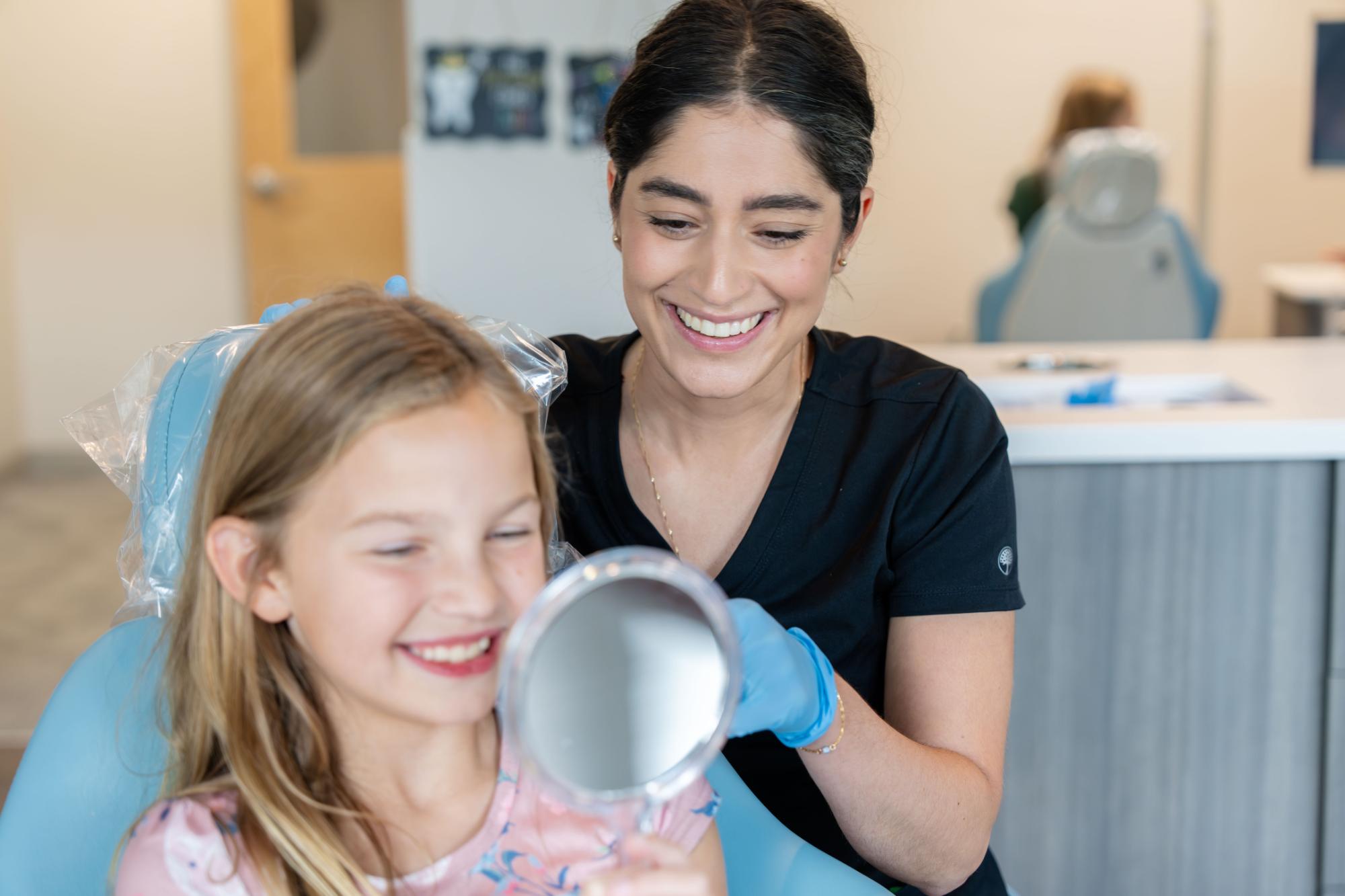
Frequently Asked Questions About Orthodontic Treatment Age
Is 7 too young for braces?
Age 7 is the right age for an evaluation, not usually for braces. Most 7-year-olds simply get checked and monitored while their permanent teeth come in. A small group benefits from early interceptive care, such as an expander for a narrow jaw or a crossbite, and that’s precisely the group early screening is designed to find.
What is the average age to get braces?
Most guests begin active orthodontic treatment between ages 9 and 14. By then the permanent teeth have largely erupted and jaw growth is still active, a combination that makes correction efficient. Some kids start earlier for specific problems, and plenty of adults start much later with excellent results. Treat these ages as general guidance rather than a fixed schedule.
Can early treatment prevent the need for braces later?
Sometimes, though it’s more common for early treatment to simplify what comes next. Phase one handles structural issues like narrow arches, crossbites, and harmful habits, so phase two becomes a shorter alignment stage with fewer complications. Occasionally the early work is all a child needs.
Is my child too old to start orthodontic treatment?
No. Teeth respond to steady, gentle force at any age, which is why we treat guests from the tween years through adulthood. An older start may call for different appliances or a slightly longer timeline, but healthy teeth and gums matter far more than the number of candles on the cake.
How long does orthodontic treatment usually take?
Most full treatment runs 12 to 24 months, with adjustment visits every 4 to 8 weeks. Early phase one care is typically shorter, often 6 to 12 months, followed by a monitoring period. Complex bites, missing teeth, and inconsistent aligner or elastic wear all extend the timeline, so these figures describe typical cases rather than guarantees.
Do adults get the same results as teens?
Adults achieve beautifully straight teeth and improved bites every day. The difference is in how the corrections happen: teens still have growth to work with, while adult jaw discrepancies may require different mechanics or coordination with an oral surgeon. Gum and bone health also guide how quickly teeth can be moved, and a stable foundation matters more than a starting age.